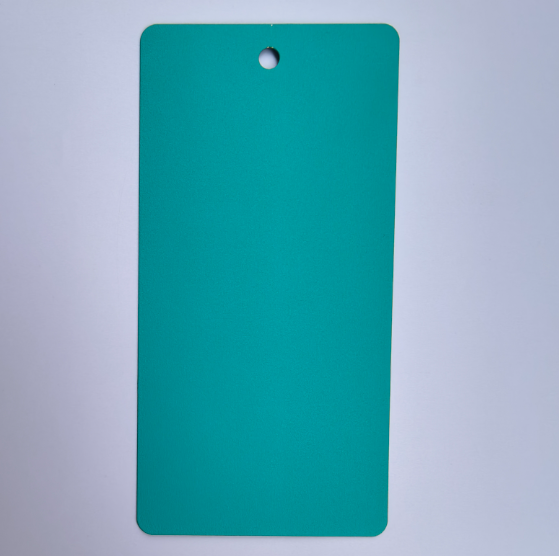
UV Reactive Powder Coating

UV Reactive Powder Coating

Price 2950.0 USD ($)/ Ton

MOQ : 1 Ton

UV Reactive Powder Coating Specification

  • Chemical Name
  • UV Reactive Powder Coating
  • CAS No
  • N/A (Mixture of polymer resins and photo-initiators)
  • Type
  • Thermosetting Powder Coating
  • Standard
  • ISO 8130; ASTM D3359
  • Grade
  • Industrial/Commercial
  • Usage
  • UV-cure powder coating for metal and non-metal substrates
  • Appearance
  • Powder, Blue color under visible light, White-blue glow under UV light
  • Physical Form
  • Fine Powder
  • Pack Size
  • 20 kg, 25 kg
  • Pack Type
  • Plastic-lined fiber drum or carton box
  • Typical Applications
  • Automotive parts, electronic enclosures, architectural components, industrial machinery
  • Adhesion
  • Excellent - 5B under ASTM D3359
  • Impact Resistance
  • 50 kgcm
  • Substrate Compatibility
  • Metals (aluminum, steel, zinc), some plastics after proper priming
  • Film Thickness
  • 60-100 microns recommended
  • Shelf Life
  • 12 months in unopened pack
  • Weather Resistance
  • Superior outdoor durability, UV stable
  • Hardness
  • 2H-3H Pencil Hardness
  • Curing Method
  • UV irradiation for polymerization
  • Cure Time
  • Less than 1 minute (typically 10-60 seconds)
  • Storage Conditions
  • Cool, dry, and ventilated areas below 30C
  • Gloss Level
  • Available in matte, semi-gloss, and glossy finishes


UV Reactive Powder Coating About

Introduction

UV-Cured Powder Coating

How can we coat heat-sensitive substrates effectively? UV-cured powder coatings provide the solution. Unlike traditional coatings that rely on high temperatures, UV-cured powder coatings utilize ultraviolet (UV) light to cure, making them ideal for heat-sensitive materials. UV-cured coatings are specifically designed to address the challenges of coating materials that deform or degrade under high temperatures, like MDF, plastics, and certain electronics.

What is UV-Cured Powder Coating?

UV-cured powder coatings are a type of powder coating that uses ultraviolet light for curing, rather than relying on traditional high-temperature ovens. The process involves applying the powder coating to the substrate and then using UV light to trigger the curing reaction. The unique feature of UV-cured powder coatings is their ability to cure at lower temperatures, typically between 100C and 120C, which makes them suitable for materials that are sensitive to heat.

The primary goal of UV-cured powder coatings is to provide an effective coating solution for substrates like MDF, plastics, paper, soldered components, and electronic assembliesmaterials that would be damaged by the high curing temperatures required by conventional powder coatings.

The curing process for UV-cured powder coatings involves two stages:

Melting: The powder is melted with a brief application of low heat to form a smooth film.

UV Curing: UV light initiates a photochemical reaction that cross-links the coating, curing it quickly and solidifying the surface.

Advantages of UV-Cured Powder Coatings

Low Curing Temperature

UV-cured powder coatings are ideal for substrates that are sensitive to high heat, such as MDF, plastics, and other composite materials. These coatings can be cured at much lower temperatures compared to traditional powder coatings, making them applicable in industries where high heat would cause damage or deformation.

Compatibility with Heat-Sensitive Materials

As mentioned, the primary benefit of UV-cured powder coatings is their ability to coat materials like MDF and plastics, which cannot withstand the high temperatures required by traditional heat-cured powder coatings. This makes UV curing essential for industries that work with these substrates.

Faster Processing Time

UV curing is much faster than traditional thermal curing methods. Once the UV light is applied, the coating cures within seconds, reducing production time and increasing efficiency. This is particularly advantageous for industries that need to increase throughput and minimize downtime.

Energy Savings

By reducing the need for prolonged high heat, UV-cured coatings can lower energy consumption, which translates into cost savings over time. This makes the process not only more suitable for heat-sensitive materials but also more economical and energy-efficient in the long run.

Environmentally Friendly

UV-cured coatings release fewer volatile organic compounds (VOCs) and have minimal environmental impact. Since UV curing does not rely on solvents, it is a more eco-friendly option than solvent-based coatings.

Common Uses:

Drone manufacturing

Consumer electronics

Automotive manufacturing

Outdoor hardware and equipment

Sports products

In 3D printed assemblies, where multiple printed pieces fit together and need to match color perfectly

Use Cases

Use UV powder coating anywhere you need:

Vibrant colors

Perfect color consistency or color matching

Outdoor weather resistance

Surface smoothing

Sealed and protected surfaces

Production-level aesthetics
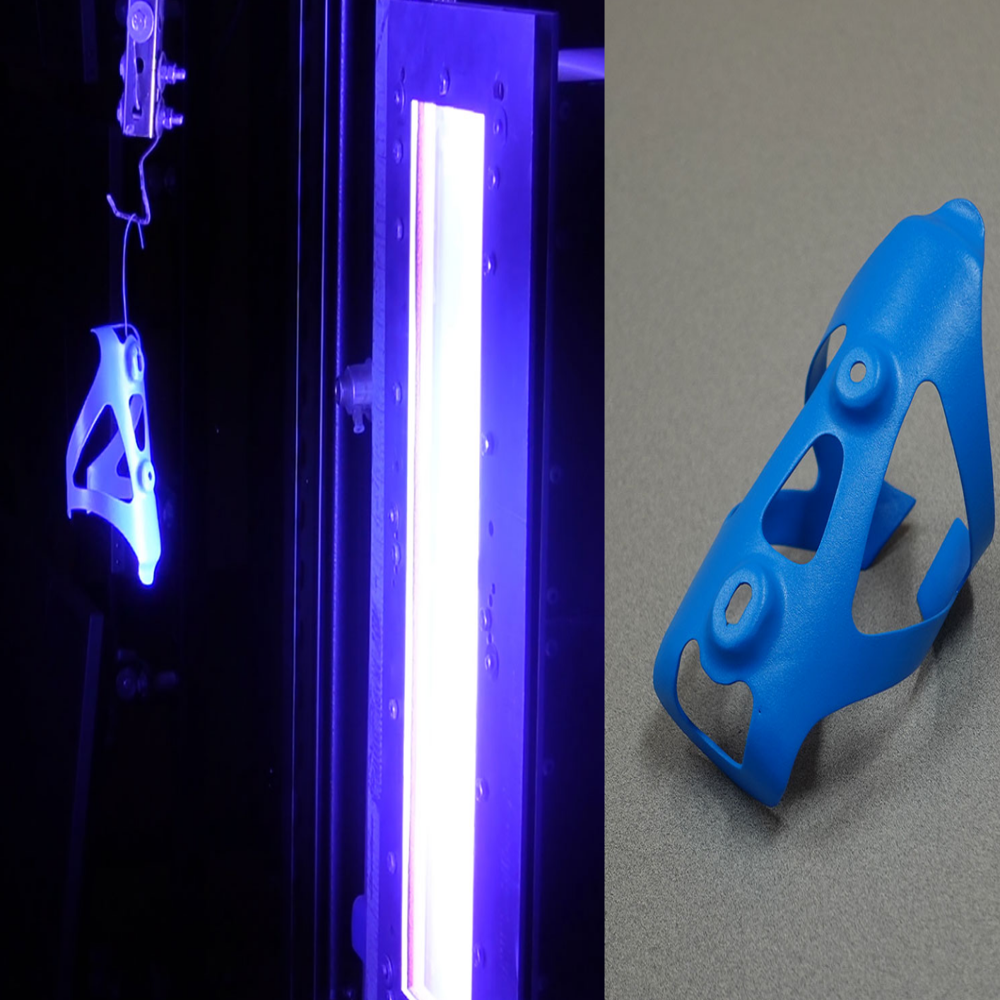


Superior UV Fast-Curing Technology

UV Reactive Powder Coating offers incredibly fast curing, needing less than a minute-typically just 10 to 60 seconds-under UV irradiation. This swift process maximizes production efficiency while ensuring robust coating performance. The rapid cure time enables high throughput and energy savings compared to conventional thermal curing methods, making it a preferred solution for industrial and commercial uses.


Outstanding Durability and Versatile Application

Engineered for excellent adhesion (ASTM D3359, 5B), hardness (2H-3H), and impact resistance (50 kgcm), this coating maintains its integrity even in demanding environments. It is UV stable and designed for superior outdoor durability. Recommended for a film thickness of 60-100 microns, it's ideal for automotive parts, electronic enclosures, architectural elements, and industrial machinery on metals and some plastics with proper priming.


User-Friendly Storage and Packaging

Supplied in 20 kg or 25 kg packs within plastic-lined fiber drums or carton boxes, this powder coating is easy to handle and store. For optimal shelf life of up to 12 months, keep the product in an unopened pack in cool, dry, and ventilated environments below 30C. This ensures the powder's stability and reliable performance upon application.

FAQ's of UV Reactive Powder Coating:


Q: How is UV Reactive Powder Coating applied and cured?

A: The powder coating is electrostatically sprayed onto compatible substrates, such as metals and pre-primed plastics. Once applied to the recommended thickness of 60-100 microns, it is exposed to UV irradiation, which initiates rapid polymerization, fully curing the coating in typically 10 to 60 seconds.

Q: What types of surfaces are suitable for this coating?

A: UV Reactive Powder Coating adheres excellently to metals such as aluminum, steel, and zinc. With suitable priming, some plastics can also be coated, broadening its application possibilities across diverse industries.

Q: When is this powder coating most beneficial to use over conventional options?

A: It is especially advantageous when fast turnaround is required, such as in high-throughput manufacturing settings. Its rapid UV curing process saves time and energy compared to thermal systems, and its robust performance properties suit demanding environments.

Q: Where can UV Reactive Powder Coating be applied?

A: This coating is commonly used in automotive parts, architectural components, industrial machinery, and electronic enclosures due to its weather and UV stability, impact resistance, and finish flexibility.

Q: What storage conditions are recommended to maintain product quality?

A: For best results, store the coating in a cool, dry, and ventilated location below 30C. Unopened packs can be kept for up to 12 months, ensuring consistent performance when needed.

Q: What are the main benefits of using UV Reactive Powder Coating?

A: Key advantages include ultra-fast curing (10-60 seconds), exceptional film adhesion, superior durability against weather and UV light, a choice of glossy and matte finishes, and adaptability for metals and select plastics.

Q: How does the appearance of the coating change under different lighting conditions?

A: Under visible light, the cured coating appears blue. When exposed to UV light, it exhibits a distinct white-blue glowing effect, making it useful for decorative and identification purposes.

Tell us about your requirement
product

Price:

Quantity
Select Unit

  • 50
  • 100
  • 200
  • 250
  • 500
  • 1000+
Additional detail
Mobile number

Email

More Products in Powder Coating Category

Blue Sand Texture Powder Coating

Blue Sand Texture Powder Coating

Price 2950.0 USD ($) / Ton

Minimum Order Quantity : 2 Tons

Pack Size : 20 kg, 25 kg bags

Standard : IS, ASTM, ISO

Physical Form : Other, Free Flowing Powder

Usage : Other, Surface coating for metal substrates, indoor & outdoor applications
Transparent powder coating

Transparent powder coating

Price 2950.0 USD ($) / Ton

Minimum Order Quantity : 1 Ton

Pack Size : 20 kg, 25 kg

Standard : ISO 9001:2015

Physical Form : Powder

Usage : Other, Surface protection and aesthetic coating of metals

High Performance Pure epoxy primer powder MT Plus -AL117N

High Performance Pure epoxy primer powder MT Plus -AL117N

Price 2950.0 USD ($) / Ton

Minimum Order Quantity : 1 Ton

Pack Size : Custom packaging available (typically 25kg bags, drums, or as per order)

Standard : Industrial/Manufacturer Standard

Physical Form : Powder

Usage : Other, Anticorrosion primer for metals, protective coatings, industrial applications
Sand grain matte MT-039/67495

Sand grain matte MT-039/67495

Price 2950.0 USD ($) / Ton

Minimum Order Quantity : 1 Ton

Pack Size : 25 kg

Standard : Industrial Grade

Physical Form : Powder

Usage : Other, Coating, Plastics, Painting, Decorative applications


arrow