
Call us now
FRP is frequently used in highly corrosive environments as it is inherently corrosion resistant and does not rust like steel. So why cover it with a protective coating? One of the primary reasons is to provide protection from ultraviolet (UV) light. Exposure to UV degrades resin at the molecular level by breaking the carbon chains of the polymer. An analogy for the degradation is the chalking of epoxy coatings when exposed to sunlight. In the case of FRP, as the breakdown of the outer surface continues over time, glass fibers are exposed and the mechanical properties of the laminate are reduced. If the surface is already degraded from UV, coatings can be applied to stop further deterioration.
1. FRP lining provides complete leak proofing, corrosion, resistance, strength and very good life for virgin material lining as well for old structures etc.
2. Precaution is also taken at the time of surface finish as required & cracks, pits, etc.
3. The surface is checked properly to ensure excellent bonding between the surface & the FRP lining.
4. Resin coat is applied & allowed to cure.
For its properties of chemical resistance, leak-proof or UV Proof, FRP lining and coatings are usually applied on an original substrate such as concrete, different types of steel, PVC, PP, PVDF, PE, EPS or any kind of thermoplastic. Underground steel tanks will need an external protection barrier to help protect itself from the weather or acidic environment. The FRP raw material applied in the lamination of lining and coating depends on the site conditions or as per customer specifications.
As the designers experience closely, GRP can be more easily and easily shaped than all other coating materials. The desired texture can be given to each surface of each panel in a building. In addition, combining these panels creates very striking curved, flat or 3D design covering patterns on building facades. Mostly this material, due to its light structure, significantly reduces the weight per square meter of the faade. This makes this material the focal material of the structure for designers who are in engineering constraints. Panels can be mounted vertically or horizontally and are most often used in conjunction with concealed carrier systems.
They are used in all building surfaces that come to mind in the construction sector.
It is also the star material of a sector that needs to struggle with environmental conditions such as cooling towers. In addition to their aesthetic appearance, they are preferred because of their superior resistance to heat changes, wind and corrosion. Their resistance to thermal shocks is excellent. They can withstand the shocks, breakage and vibrations for many years as they did the first day. Even after many years, they can still remain the same as the first day. They can also be disassembled and replaced if necessary. This makes the GRP composite coating the main building material of the cooling tower designs as well as the surfaces where all facade cladding is required.
The boards can be used as a stand-alone set of wall cladding materials, or they can be easily mounted on gypsum board. It is possible to construct any thickness wall with these sandwich panels which are formed by layer layer by means of insulating materials. The panels formed compete very well with the environmental conditions. The building material used as the final surface coating of composite sandwich panels is always fiber-reinforced polymers.
A wide variety of generic coating types can be applied to FRP. The specific system is selected based the expected environmental exposure, such as chemical or UV. Following are several coating types that are frequently applied to FRP:
Gel coats Gel coats are typically applied during the manufacturing process. It is a finish coat that uses the same base resin that was used in the fabrication of the product with additional UV stabilizers and pigments added. There is no reinforcement material in this layer, and it does not provide structural properties to the fabricated item. Gel coats can be applied to the surface of the mold prior to injecting the FRP material or applied by spray, brush, or roller to the surface of the completed item. Examples include exterior FRP panels and pleasure watercraft where a UV stable gel coat is used.
Several water-based acrylic coating systems are suitable for application to FRP. Acrylic coatings are single component, easy to apply, and do not require the addition of solvents for application other than water. They contain little to no volatile organic compound (VOCs) which makes them ideal for use in regions with stringent restrictions on VOC emissions. UV resistance, color retention, and resistance to chalking are typically good, but can vary between products. For exposure to more severe service environments (chemical/marine), a more robust coating system would be recommended. The use of a bonding primer may be needed depending on the individual coating. The coating manufacturer and product data sheets should be consulted for specific product requirements.
Epoxy systems generally provide excellent chemical resistance and are often selected when chemical exposures are anticipated. Epoxies are two component systems that require mixing prior to application. Although water-based epoxy can be used, solvent-based is more common. Epoxies in general have poor UV resistance and will chalk and fade with exposure to sunlight. If sunlight exposure is anticipated, a finish coat such as urethane is applied to the epoxy.
Urethane coatings consist of two components and typically have good chemical resistance. Unlike epoxies, urethanes have excellent resistance to UV light and are suitable for outdoor service. They can be applied as a finish coat to epoxy or applied directly to the FRP.
FRP water tanks and acid Overlays
Acid Cap GRP Skins
Concrete floor and roof coatings
Acid Ground FRP Overlays
Treatment Plant Isolation


Price:
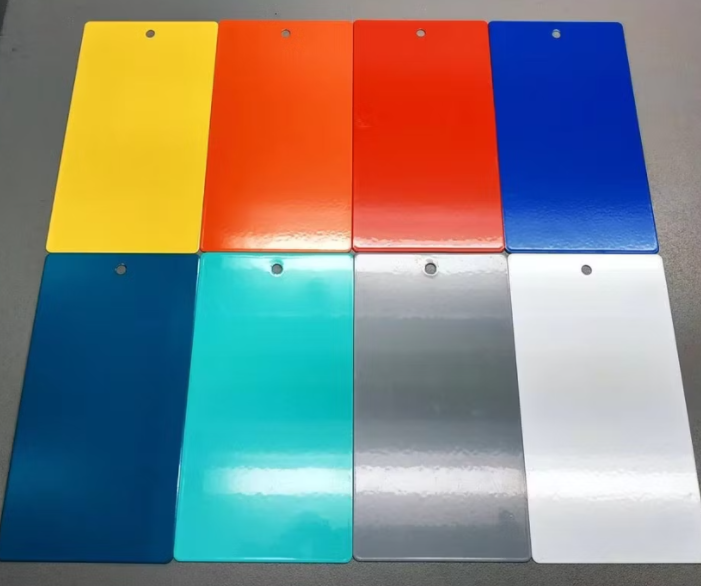
Price 3.0 USD ($) / Kilograms
Minimum Order Quantity : 100 Kilograms
Standard : ISO 8130 / ASTM D3359 / Qualicoat
Pack Size : 20 kg, 25 kg
Physical Form : Other, Fine powder
Usage : Other, Protective and decorative coating for metal surfaces, suitable for outdoor applications

Price 3.0 USD ($) / Kilograms
Minimum Order Quantity : 100 Kilograms
Standard : IS/ISO 8130
Pack Size : 20 Kg, 25 Kg
Physical Form : Other, Fine Powder
Usage : Other, Gymnasium Equipment, Metal Surfaces, Indoor & Outdoor Structures
Price 2950.0 INR / Ton
Minimum Order Quantity : 1 Ton
Standard : Industry Standard
Pack Size : Varied sizes available (commonly 25 kg)
Physical Form : Other, Solid (powder)
Usage : Other, Surface coating for metals and industrial equipment
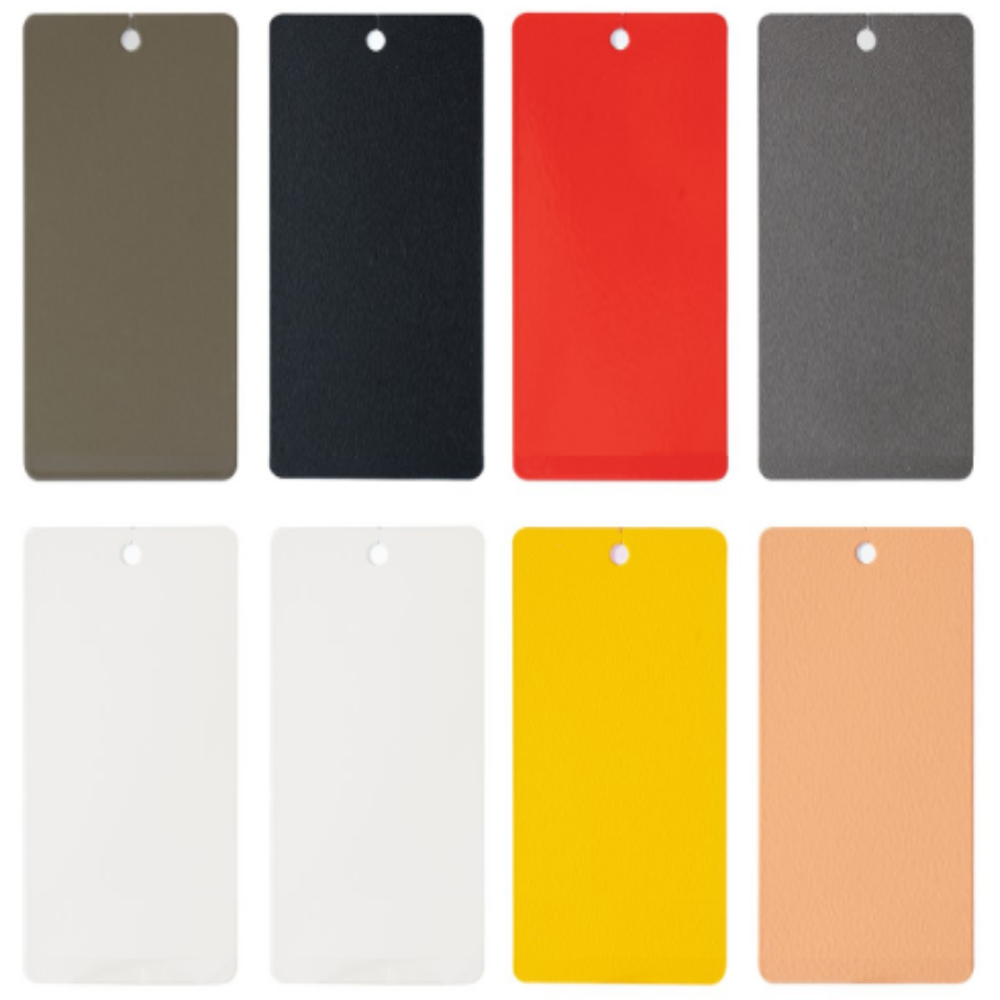
Price 2950.0 USD ($) / Ton
Minimum Order Quantity : 1 Ton
Standard : ASTM D6578, ISO 8130
Pack Size : Available in 20 kg, 25 kg bags
Physical Form : Other, Fine powder
Usage : Other, Protection of metals and surfaces exposed to harsh chemicals


 Send Inquiry


 Send Inquiry
 Send Inquiry
